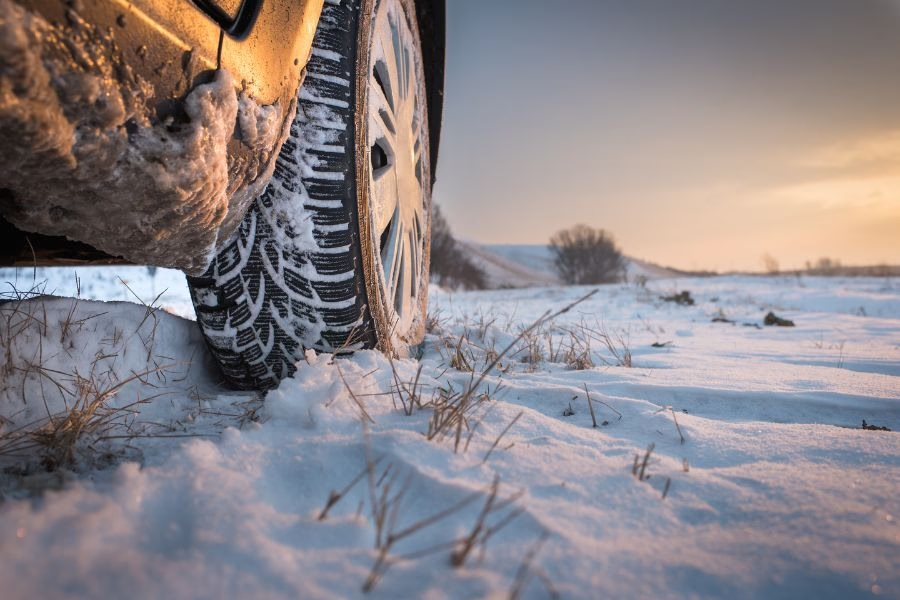
Winter weather around Reno can change quickly. One week still feels like fall, and the next brings freezing mornings or the first snow in the Sierra.
That is why October is a good time to start thinking about your tires, especially if you regularly drive over Donner Summit, Mt. Rose, or up to Tahoe.
Reno Vulcanizing has been helping Northern Nevada drivers prepare for winter since 1922. Here is what to know about timing your tire change, choosing the right type of tire, and preparing for mountain chain controls.
The 45-Degree Rule for Winter Tires
A common rule of thumb is to start thinking about winter tires once temperatures regularly fall below about 45 degrees.
Winter tires are made with rubber compounds designed to stay flexible in colder temperatures, which helps them maintain traction as the weather cools.
You do not need to wait for the first snowfall to make the switch. Cold mornings, frost, and icy patches can arrive well before snow starts sticking in the valley.
When Should Reno and Sparks Drivers Switch to Winter Tires?
For many Reno and Sparks drivers, late October through November is a practical time to make the change.
If you frequently commute to Tahoe, Truckee, Incline Village, or other higher elevations, scheduling earlier can make sense. Mountain weather often arrives before winter conditions reach the valley.
Waiting until snow shows up in the forecast also tends to mean busier tire shops, so booking your tire appointment ahead of the first major storm can make the process easier.
If you recently worked through our fall car care checklist, your tire inspection can also help determine whether last year’s winter set is ready for another season.
Chain Controls on I-80, Donner Summit & Mt. Rose Highway
Even with winter tires, drivers heading into the Sierra should know how chain controls work.
California Chain Controls on I-80
Caltrans uses three main levels of chain control during winter storms.
Under R1, chains are required on most vehicles, although certain passenger vehicles and light-duty trucks with qualifying snow tires may be exempt.
Under R2, chains or traction devices are required unless the vehicle has four-wheel or all-wheel drive and snow-tread tires on all four wheels.
Under R3, chains or approved traction devices are required on all vehicles with no exceptions. Caltrans notes that roads are often closed before conditions reach R3.
Even if your AWD or 4WD vehicle is exempt from installing chains at a certain control level, Caltrans requires drivers entering a chain-control area to carry traction devices.
Nevada Winter Driving Requirements
Nevada also uses posted chain and traction requirements when road conditions call for them. NDOT advises drivers to follow all posted chain requirements and check current road conditions through Nevada 511 before heading out.
For anyone regularly traveling Mt. Rose Highway or other higher-elevation routes, carrying the proper traction equipment is a smart part of winter preparation.
Winter vs. All-Season vs. All-Weather Tires
The right tire depends largely on where and how often you drive.
Dedicated Winter Tires
Dedicated winter tires are designed specifically for cold temperatures, snow, and ice.
Many carry the three-peak mountain snowflake symbol, or 3PMSF, which indicates the tire has met a standardized snow-traction performance requirement.
They are a strong option for drivers who regularly travel between Reno and Tahoe or spend a lot of time in higher elevations during winter.
All-Season Tires
All-season tires are designed to handle a wide range of everyday conditions and can work well for many Reno and Sparks commuters.
For drivers who mostly stay in the valley and can avoid driving during heavier winter storms, a quality all-season tire may be sufficient.
If you regularly head into the mountains, however, you may want more winter-specific traction.
All-Weather Tires
All-weather tires fall somewhere between traditional all-season and dedicated winter tires.
Many carry the 3PMSF symbol while still being designed for year-round use. They can be a convenient option for Reno and Sparks drivers who occasionally head into the mountains but would rather not change between two sets of tires each year.
Reno Vulcanizing carries several major tire brands and can help you choose a tire based on your vehicle, commute, and typical winter driving.
Studded Tire Season in Nevada
Nevada permits qualifying studded tires from October 1 through April 30. Outside of that period, standard metal-studded tires are not permitted on Nevada roadways.
Studded tires can provide additional traction on packed snow and ice, but they are not automatically the best choice for every driver.
Many modern studless winter tires provide strong cold-weather traction without the added road noise and pavement wear associated with studs.
If you are not sure which option makes the most sense, consider where you drive most often rather than simply choosing the most aggressive winter tire available.
Should You Get an Alignment When You Install Winter Tires?
A tire swap is also a good opportunity to check your alignment.
If your vehicle is out of alignment, new tires can wear unevenly and more quickly than they should. You may also notice pulling, an off-center steering wheel, or uneven tread wear.
Scheduling a wheel alignment check along with your tire change can help protect your new set and keep the vehicle tracking properly.
A tire rotation and wheel balance may also be recommended depending on the condition of the tires being installed.
How to Store Your Summer Tires During Winter
If you use two separate sets of tires, a little care during storage can help preserve the set you are not using.
Clean the tires first and let them dry completely. Store them indoors in a cool, dry area away from direct sunlight and major heat sources.
Tires mounted on wheels can generally be stacked, while unmounted tires are best stored upright.
It can also help to label each tire by position before removing it so your technician knows where it was mounted when spring arrives.
Reno Vulcanizing: Winter Tires in Reno & Sparks
If colder mornings are starting to show up, now is a good time to check the condition of your tires and decide whether you are ready for another Northern Nevada winter.
Reno Vulcanizing provides tire sales, installation, balancing, and alignment services for drivers throughout Reno and Sparks. Our team can help you choose between winter, all-season, and all-weather tires based on your vehicle and where you drive most often.
Schedule your winter tire service at our N Virginia Street, Plumb Lane, or Prater Way in Sparks location, or find the Reno Vulcanizing shop closest to you.