
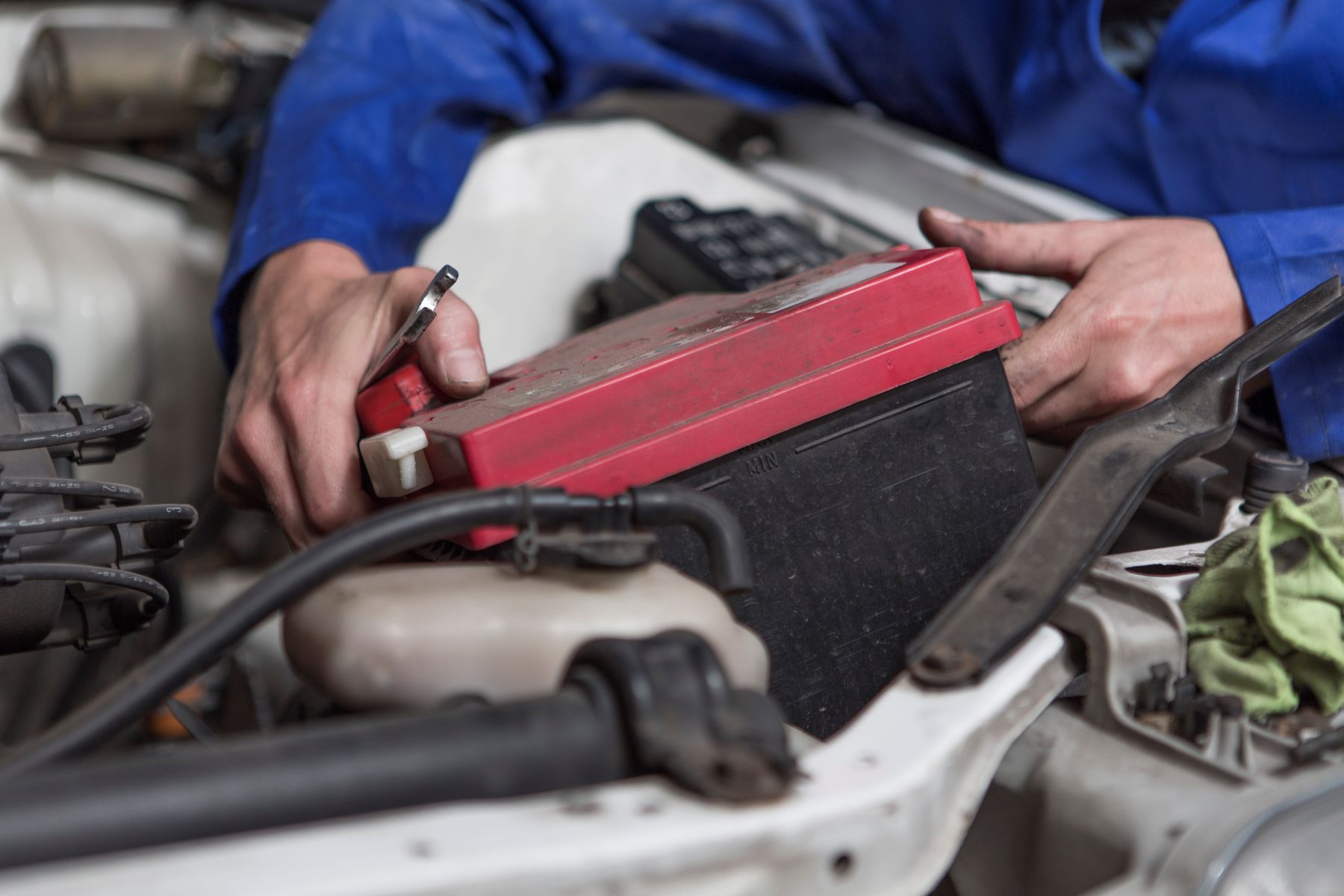
Did your car turn over slowly this morning, or just click and do nothing? The first real cold snap of the season tends to find every battery that was already on its way out.
Cold weather usually isn’t what causes the failure. It exposes one that was already developing, often months earlier.
Understanding what the symptom is telling you makes the difference between a quick test and an unexpected tow.
Here’s why cold weather affects car batteries, how to tell a battery problem from an alternator problem, and what to check before temperatures drop further.
Why Does Cold Weather Make It Harder to Start a Car?
Two things work against you at once on a cold morning.
A car battery produces power through a chemical reaction, and that reaction slows as the temperature drops. AAA has measured a battery losing roughly 35 percent of its capacity at 32 degrees.
At the same time, cold engine oil thickens. The starter has to turn a stiffer engine, which demands more power from the battery than it would on a mild day.
A healthy battery handles both without trouble. One that’s aging may have been getting by in warm weather with less margin than you realized.
What Does It Mean When Your Car Clicks but Won’t Start?
How your car fails to start narrows the cause considerably.
- Slow, labored cranking: The engine turns over sluggishly, which commonly points to a weak car battery.
- Rapid clicking: Enough power to engage the solenoid but not enough to turn the engine, also typically a battery or connection issue.
- One loud click with no cranking: This may point toward the starter rather than the battery.
- No sound and no dashboard lights: Often a completely dead battery, or a loose or corroded connection.
- Cranks normally but won’t fire: The battery is probably fine, and the cause is more likely fuel, ignition, or a sensor.
- Starts then dies immediately: This often points toward the charging system rather than the battery.
These are general patterns rather than a diagnosis. Testing is what confirms which component is actually at fault.
Is It a Dead Car Battery or a Bad Alternator?
The two get confused often, because either one leaves you stranded.
What a Car Battery and Alternator Each Do
A battery stores the power needed to start the engine. An alternator recharges the battery and runs the electrical system while the engine is running.
Signs of a Failing Alternator
- The battery warning light comes on while you’re driving
- Headlights dim at idle and brighten when you rev the engine
- The car starts with a jump but dies once the cables come off
- A new battery goes flat within a short period
- Electrical accessories behave erratically
How to Tell the Difference With a Jump Start
A car that starts after a jump and keeps running is more likely a battery issue. A car that dies as soon as the cables are disconnected is pointing toward the alternator or charging system.
How Long Does a Car Battery Last?
There’s no single number. Battery life depends on climate, driving patterns, and how much electrical demand the vehicle places on it.
Heat is actually harder on car batteries than cold, which matters in a climate with hot summers and cold winters. Short trips contribute as well, since the alternator may not have time to fully recharge between starts.
Battery testing tells you more than age does. A battery can show normal voltage while sitting and still fail under the load of starting an engine, which is why a load test is the meaningful measurement.
What Should You Check on Your Car Before Winter?
Running through this list takes very little time and prevents most cold-morning surprises.
- Have the car battery load tested: This shows whether it can still deliver under demand, and it’s the single most useful step before winter.
- Inspect the battery terminals: White or bluish buildup on the posts, or a cable that moves when you wiggle it, can cause starting problems on its own.
- Confirm the battery is secured: A battery that shifts can damage the terminals and the case over time.
- Test the charging system: Checking the alternator at the same time rules out the other common cause.
- Verify your engine oil viscosity: The grade your manufacturer specifies for cold conditions affects how hard the starter has to work.
- Mention your driving pattern: If most of your trips are short, that changes how quickly a battery is likely to wear.
What Should You Do If Your Car Won’t Start?
A few steps before you call for help can tell you a lot and sometimes get you moving.
- Check the headlights: Dim or dead lights suggest an electrical problem. Bright lights mean the battery may be fine.
- Turn off every accessory: Heater, radio, seat heaters, and lights all draw power the starter needs.
- Pause between attempts: Repeated cranking drains a weak battery quickly, so wait a minute between tries.
- Jump start carefully: Follow the order in your owner’s manual and let the vehicle run afterward rather than shutting it off right away.
- Get the battery tested even if it starts: A car that needed a jump once will usually need one again, and the second time is rarely convenient.
Should You Get Your Car Checked Before a Holiday Road Trip?
Late November and December bring longer trips for a lot of drivers, and roadside assistance organizations consistently report dead batteries and flat tires among the most common reasons they’re called out over the Thanksgiving stretch.
Both are things you can check in advance. A battery test and a look at tire condition and pressure take very little time compared with waiting for a tow on a holiday weekend.
Cold weather also lowers tire pressure, which is why the dashboard warning light tends to appear after the first cold night even when nothing is wrong with the tire.
Frequently Asked Questions About Cold Weather Starting Problems
Why Does My Car Only Struggle to Start When It’s Cold?
Cold slows the chemical reaction inside the battery while thickening engine oil, so the starter needs more power at the exact moment the battery can deliver less. A battery with reduced capacity may work fine in mild weather and fail on the first cold morning.
Can a Car Battery Die From Cold Alone?
Cold rarely kills a healthy battery. It reveals one that has already lost capacity through age, heat exposure, or repeated short trips that don’t allow a full recharge.
How Do I Know If I Need a New Battery or a New Alternator?
If the car starts with a jump and continues running, the battery is the more likely culprit. If it dies as soon as the jumper cables come off, the charging system is the place to look. A test confirms which it is.
Does Cold Weather Affect Tire Pressure?
Yes. Air contracts as it cools, so tire pressure drops with temperature. The warning light commonly comes on after the first cold night of the season even when the tires have no leak.
Get Your Battery Tested at Reno Vulcanizing in Reno & Sparks, NV
If your car has been slow to start, or you’d rather find out now than on a cold morning, our team at Reno Vulcanizing can test it.
We provide battery testing and replacement as part of our electrical system diagnostics and repair, and we can check the charging system at the same time.
Proudly serving drivers throughout Reno and Sparks since 1922, we have three locations: N Virginia St, E Plumb Ln, and E Prater Way.
Don’t wait for a no-start morning. Contact Reno Vulcanizing to have your battery and charging system checked.