Reno Vulcanizing Has Been Proudly Serving Northern Nevada for Over 100 Years
Tires are a significant investment in your vehicle’s safety, handling, and ride quality. Without routine maintenance, even high-quality tires can wear unevenly and lose performance long before their tread life is used up.
At Reno Vulcanizing, tire rotation and wheel balancing services are performed to protect that investment. These services help ensure even tread wear, eliminate vibration, and keep your vehicle driving smoothly on Northern Nevada roads.
Tire Rotation and Tread Wear Control
Front and rear tires perform different jobs. On most vehicles, the front tires carry more weight, handle steering forces, and experience higher wear rates than the rear tires. Over time, this creates uneven tread patterns that shorten tire life.
What tire rotation does
Tire rotation moves each tire to a different position on the vehicle using a pattern matched to the drivetrain and tire design. This allows all four tires to wear more evenly.
Why rotation matters
Rotating tires at regular intervals helps prevent irregular wear patterns such as cupping or edge wear. Without rotation, tires may need to be replaced early even though usable tread remains.
When rotation is recommended
Most vehicles benefit from tire rotation every 5,000 to 7,000 miles, often during routine oil service.
Wheel Balancing and Ride Quality
While rotation manages tread wear, wheel balancing manages weight distribution within the tire and wheel assembly.
Signs balancing may be needed
If you feel vibration in the steering wheel, seat, or floor at highway speeds, the wheel assembly may be out of balance. This is different from alignment issues, which typically cause the vehicle to pull left or right.
How balancing works
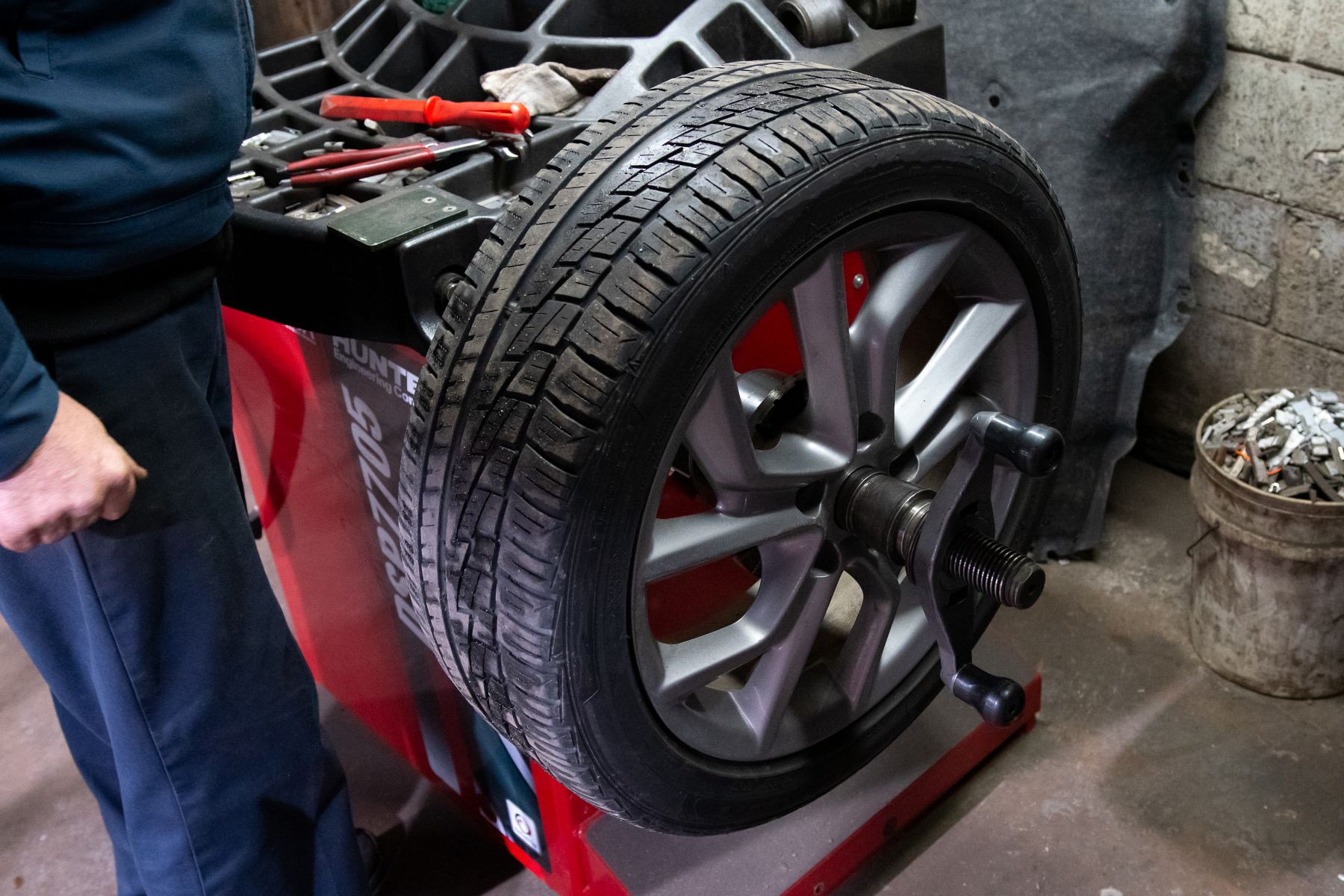
Even new tires can have small weight inconsistencies. Computerized balancing spins the wheel to detect heavy spots. Small, precisely placed weights are then added to counteract imbalance.
Proper balancing:
- Eliminates vibration
- Improves ride comfort
- Reduces stress on suspension components
When to Schedule Rotation or Balancing
Maintenance needs vary by vehicle and driving conditions, but these guidelines apply to most drivers:
- During routine service
Tire rotation is often performed at the same interval as oil changes. - When new tires are installed
Wheel balancing is required whenever new tires are mounted. - After road impacts
Hitting a curb or pothole can knock a balance weight loose. - If vibration is noticed
Any shake or shimmy at speed should be inspected promptly.
Staying ahead of these services helps maximize tire life and maintain predictable handling.