Reno Vulcanizing Has Been Proudly Serving Northern Nevada for Over 100 Years
A flat tire is a safety issue, not just an inconvenience. Driving on a punctured or underinflated tire can cause internal damage that is not visible from the outside and may make the tire unsafe at highway speeds.
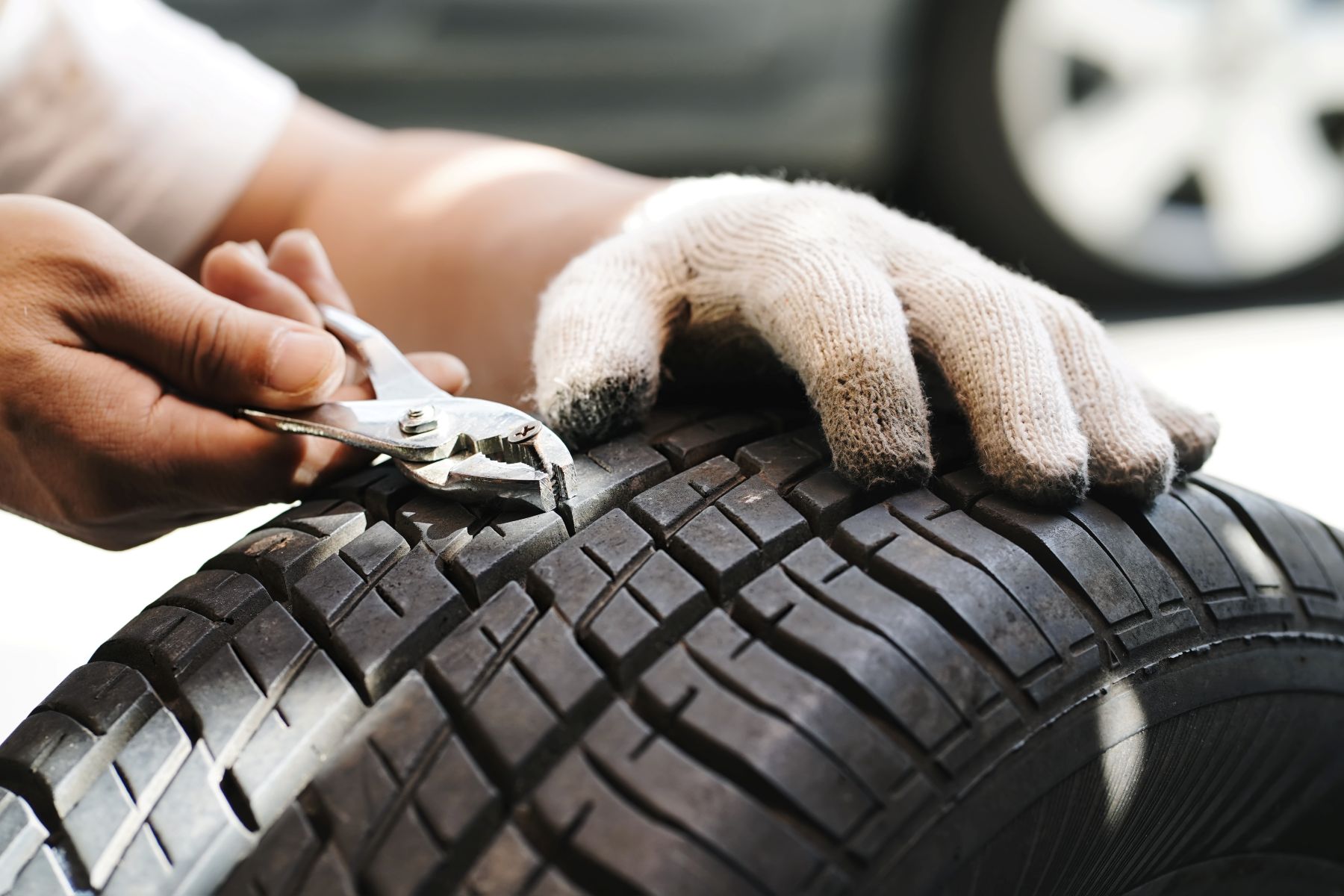
At Reno Vulcanizing, flat tire repair is treated as a safety service. Temporary plugs are never used as a final repair. Every tire is inspected internally and repaired only when it meets established safety guidelines.
If your tire is losing air or completely flat, avoid driving on it and have it inspected as soon as possible.
How a Flat Tire Is Repaired Safely
Not all tire repairs are equal. Many roadside kits and quick services use external string plugs. These may stop the air leak temporarily, but they do not inspect internal damage or seal the tire correctly.
A safe repair requires removing the tire from the wheel and inspecting it from the inside.
The repair process includes:
- Dismount and internal inspection
The tire is removed so the inner liner can be checked for hidden damage caused by the puncture or by driving while underinflated. - Internal patch and plug repair
A one-piece patch and plug is installed from the inside. This seals the puncture channel completely and prevents moisture from entering the tire structure. - Remount and balance
The tire is reinstalled and balanced to ensure smooth operation without vibration.
This method restores air retention and preserves the structural integrity of the tire when repair is allowed.
When a Tire Can Be Repaired
Industry safety guidelines determine whether a tire can be safely repaired.
A tire may be repairable if:
- Puncture location
The damage is within the central tread area where the tire contacts the road. - Puncture size
The hole is approximately one quarter inch in diameter or smaller. - Tire condition
The tire has not been driven on while flat or severely underinflated.
When Replacement Is Required
For safety reasons, some tires cannot be repaired.
Replacement is required if:
- The puncture is in the sidewall or shoulder area
- The tire shows heat damage from being driven while flat
- The internal structure has been compromised
In these cases, replacement is the only safe option.
This recommendation is based on safety standards, not convenience.
Tire Pressure Monitoring System (TPMS) Concerns
Most modern vehicles are equipped with a Tire Pressure Monitoring System.
- A solid TPMS warning light usually indicates low pressure from a puncture or slow leak.
- A flashing TPMS light may indicate a sensor issue or battery failure rather than a tire leak.
During inspection, TPMS sensors are checked for signal and battery condition so the correct issue is addressed.